Airbnb vs. Hotels: Which is Better for Your Trip with BetterStay?
Airbnb wins when you want space, a kitchen, or a neighborhood a hotel doesn't reach. Hotels win when you want predictability, a front desk, and someone to fix things at 2am. The honest answer to 'which is better for my trip?' almost always depends on three things — and BetterStay can help with the first one whichever way you lean.
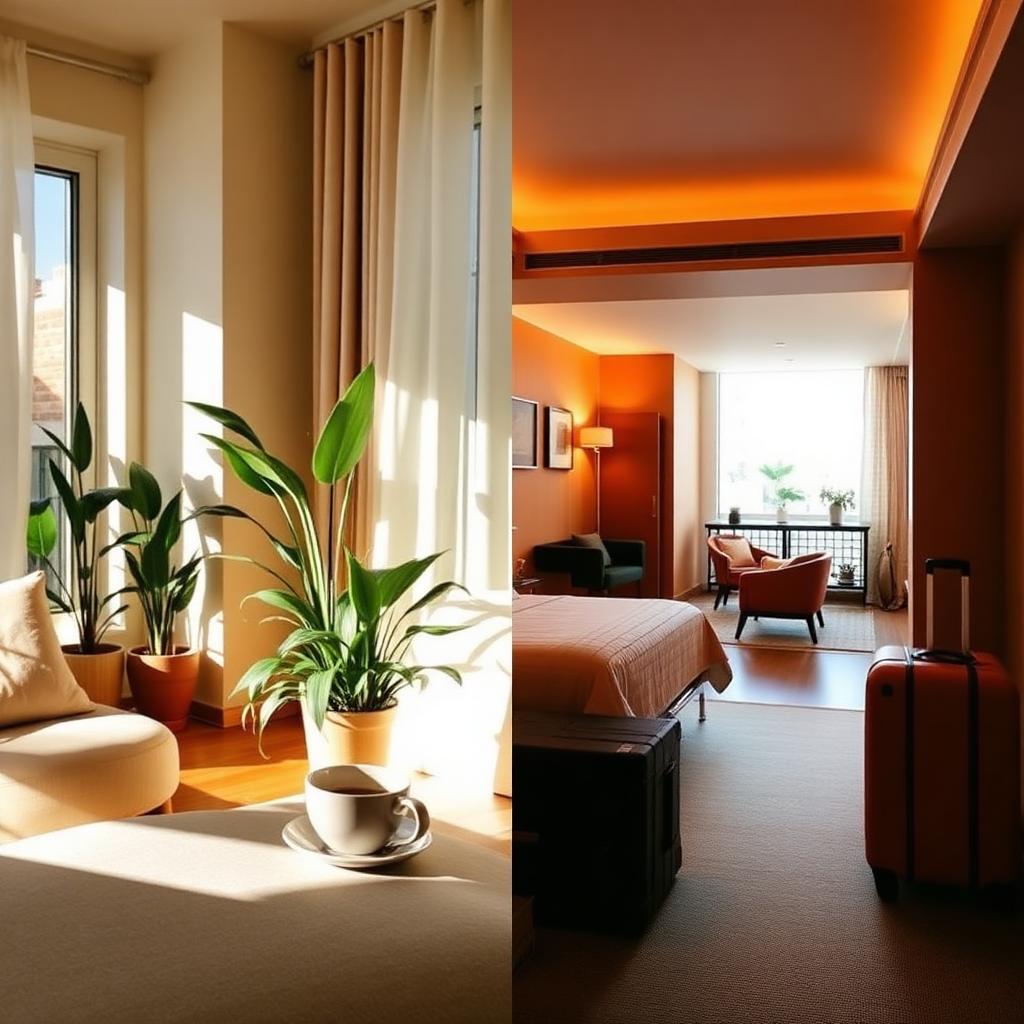
Short answer: Airbnb is usually better when you want more space, a kitchen, a longer stay, or a specific neighborhood a hotel chain doesn't cover. Hotels are usually better when you want predictability — a front desk at 2am, daily housekeeping, a cancellable rate booked yesterday for a trip tomorrow, and loyalty points on top. For most trips the choice comes down to three things: how many people, how many nights, and how much you value a real human on-site if something breaks.
The rest of this post is the honest field guide — where each format quietly wins, where each one quietly loses, and how to keep your options open when the exact place you want is "fully booked."
Understanding Your Accommodation Needs
Before comparing platforms, it's worth being honest about the trip itself. Airbnb versus hotel is not a taste question — it's a fit question. Four inputs decide the answer almost every time:
- Group size and layout. Two people in one room? Hotels are almost always cheaper per night and less hassle. Four adults, or two adults plus kids? A two-bedroom Airbnb beats connecting hotel rooms on both price and sleep quality.
- Length of stay. One or two nights, the check-in friction and cleaning fee of Airbnb rarely pay off. Five nights and up, an apartment with a kitchen and a washer starts winning on comfort and total cost.
- Trip rhythm. Business trip with early meetings and a room-service dinner? Hotel. Slow week working remotely from a new city with your partner? Apartment.
- Risk tolerance. If a bad host or a last-minute host cancellation would seriously derail your trip — a wedding, a conference talk, a non-refundable flight for eight people — the operational reliability of a chain hotel is a real feature, not marketing.
Run those four filters honestly before you open either app. Half the "Airbnb was awful" stories are really "we booked the wrong format for the trip we were taking." The other half are genuinely awful hosts, and those deserve their own post.
Airbnb Benefits with BetterStay
Airbnb's real advantages haven't changed much in a decade: space, kitchens, neighborhoods hotels don't reach, and the occasional truly special stay you'd remember for years. Its real disadvantages haven't changed either: opaque fees, variable quality, and the fact that the good listings in popular cities are booked out months in advance.
BetterStay exists to fix the last one. If you already know the neighborhood, the dates, and roughly the kind of place you want, you can set a watch on that exact Airbnb search and get an alert the moment a matching listing opens up — usually because another traveler cancelled. A few patterns where this is disproportionately useful:
- Peak-season European cities. Rome in June, Lisbon in September, Barcelona around any event. The map looks empty on Airbnb; cancellations happen every day. A watch surfaces them before the next hundred travelers refresh manually.
- Family-sized apartments. Two-bedroom stays in central neighborhoods are the first inventory to sell out and the most valuable to catch on cancellation — the alternative is booking two hotel rooms at 2x the price.
- Longer stays with a kitchen. Anything past five nights where you want to cook a few times. The whole value proposition of Airbnb depends on getting the right listing, not the last one available on the block.
- Neighborhoods hotels ignore. Kreuzberg in Berlin, Trastevere in Rome, Shimokitazawa in Tokyo. If location is the point of the trip, you'd rather wait for a cancellation in the right postcode than settle for a hotel three metro stops away.
None of this makes Airbnb the right answer for every trip — it just makes "the place I actually wanted is sold out" a much smaller problem than it used to be. If you'd normally give up after two searches and default to a hotel, a watch is worth setting first.
Hotel Advantages and How BetterStay Complements Them
Hotels quietly win a lot of trips, and it's worth naming why without the usual condescension. A well-run hotel gives you four things Airbnb structurally can't:
- A staffed front desk. Locked out at 1am, heater broken on a January night, needing a late checkout because your flight moved — someone is physically there. That is not a small feature when a trip goes sideways.
- Consistent, testable quality. A chain hotel at a given tier is the same in Madrid and Osaka. You know exactly what you're getting; the photos are the photos.
- Flexible last-minute rates. Booking 18 hours out on Airbnb is a bad experience — Instant Book or not. Hotels routinely have cancellable inventory the day of, sometimes cheaper than the same room a week earlier.
- Loyalty programs that actually pay back. If you already travel for work, points and status compound into free nights and upgrades in a way Airbnb has no equivalent for.
Small honesty note here: BetterStay is currently an Airbnb-focused tool. We watch Airbnb searches and alert you to openings on Airbnb. We don't yet run watches on Booking.com, Marriott, or Hilton inventory — a lot of you ask, and it's on the roadmap, not shipped. The nearest thing we do today that helps hotel-minded travelers is watchingaparthotels and small serviced-apartment brands that list on Airbnb — Sonder, Numa, Locke, Blueground and their peers. When you want the reliability of a hotel with the space of an apartment, those are usually the answer, and they cancel just like everything else on the platform.
Making an Informed Decision
A useful way to decide, trip by trip, without agonizing:
- 1–2 nights, 1–2 people, city break. Book the hotel. Cancellable rate, done in ten minutes.
- 3–4 nights, couple, specific neighborhood. Try Airbnb first. If the neighborhood is sold out, set a watch for cancellations and book a refundable hotel as a backup — cancel one when the other confirms.
- 5+ nights or 3+ people. Airbnb almost always wins on price and comfort. Worth waiting a week or two for a cancellation on a great listing rather than panic-booking a mediocre one.
- High-stakes trip (wedding, conference, medical). Bias toward hotels. The front desk is insurance.
- Everything is booked and check-in is in 72 hours. Read Beyond 'Fully Booked' — the fastest paths through a sold-out map are the same whether you end up on Airbnb or in a hotel.
The framing that matters isn't "Airbnb vs. hotels." It's "the right stay for this trip, ideally at the price and neighborhood I actually want." Sometimes that's an apartment you had to wait three weeks for. Sometimes it's a boring, reliable hotel two blocks from the venue. Both are fine answers.
Frequently Asked Questions
Can BetterStay help me book hotels?
Not directly, yet. BetterStay watches Airbnb searches today — alerting you when a matching listing opens up, usually via a cancellation. Hotel-inventory watches (Booking.com, Marriott, Hilton, independent hotels) are on the roadmap but not shipped. In the meantime, the closest thing we do for hotel-minded travelers is surface aparthotels and serviced apartments that list on Airbnb — Sonder, Numa, Locke, Blueground and similar — which behave much more like hotels (24/7 support, consistent quality, self-check-in) while still being catchable when they cancel. If you'd like to be notified when we add hotel watches, tell us the chains and cities that matter to you through our contact form — that feedback genuinely shapes what we build next.
How does BetterStay ensure the quality of its recommended accommodations?
We don't own or curate the listings — that would put us in the same position as Airbnb, which is not the business we're in. What we do is layer verification on top of the public Airbnb inventory: every alert we fire links to a real listing we've just re-checked as bookable for your exact dates (rather than a stale cached page), and we suppress alerts for listings flagged as brand-new with no reviews unless you've explicitly asked to see them. When check-in is under 72 hours away and a watch is marked urgent, we prioritize Instant Book listings so you're not stuck waiting on host approval. Beyond that, the review filters and superhost signals on Airbnb itself are still the best quality proxy — we just help you catch a great listing before someone else does.
Stop refreshing Airbnb.
Paste a search URL. We'll email you the moment a cancellation or new listing matches your dates. Two watches, free forever.
Start a free watch